
Ovulation test reader
Scan each LH strip and see when your surge is coming.

How it works
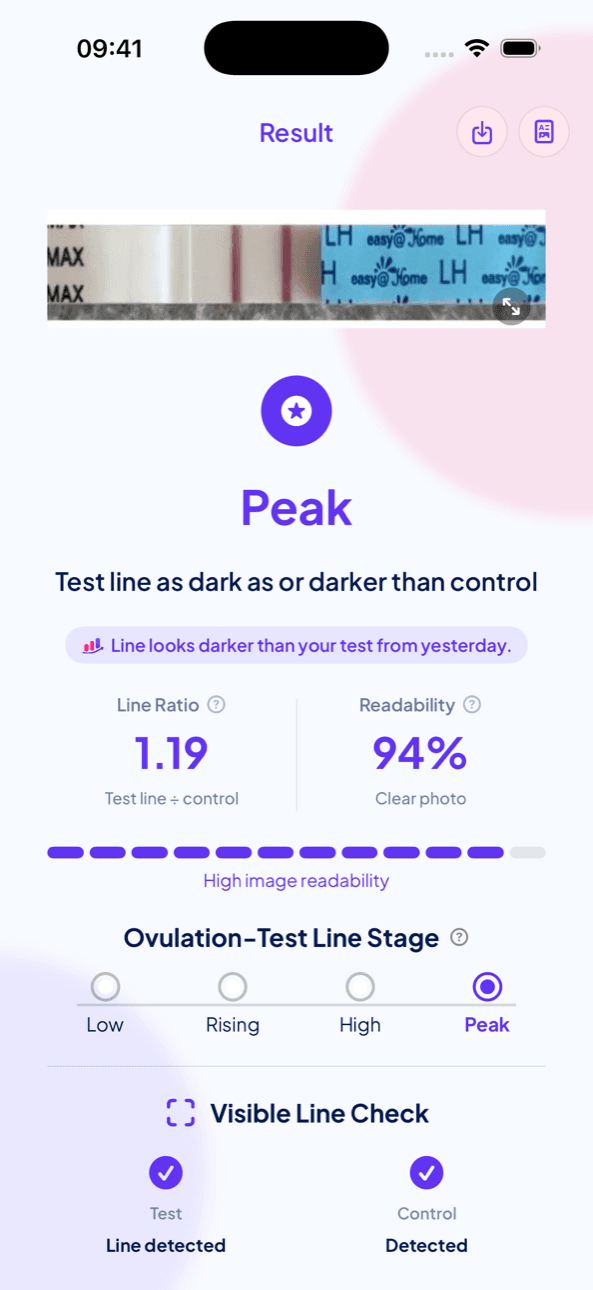
Scan your strip
From the camera or your photo library.
Get a ratio
Test line measured against the control line.
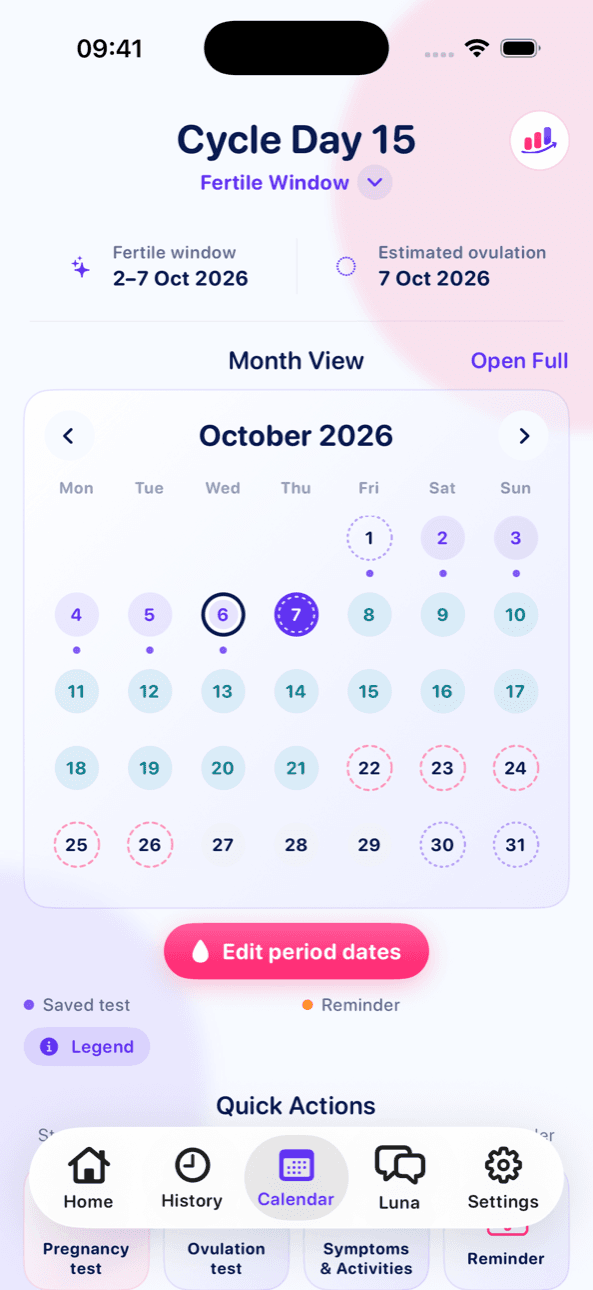
See the pattern
Each day on your calendar and trend chart.
Watch an LH surge build
Scroll through one cycle’s ovulation strips.
Line ratio
0.18Low
Day 1
Illustration of a typical surge. Always check your test’s instructions.
Cycle tracking
Fertile window
Estimated from your cycle history.
LH trend charts
Last 7 or 30 days, this cycle or the last.
Daily comparisons
Darker or lighter than yesterday.
Cycle signals
BBT, cervical mucus and symptoms.
Test reminders
At the times you choose.
Apple Health
Optional sync for your cycle data.
A positive LH test shows a surge, not that ovulation happened. Estimates can be wrong, and ovulation tests aren’t contraception.
Questions
What is the LH line ratio?
It's the strength of the test line divided by the strength of the control line on the same strip. A ratio around 1 or higher means the test line is as dark as or darker than the control, which most LH test brands treat as a positive. Because both lines are on the same photo, the ratio is steadier than judging darkness alone.
When should I start using ovulation tests?
It depends on your cycle length, so follow your test's instructions. LineCheck's calendar estimates your fertile window from your cycle history, and you can set reminders to test each day as it approaches.
I got a peak — when will I ovulate?
The LH surge usually comes about a day to a day and a half before ovulation, according to the US Food and Drug Administration. That's a typical pattern, not a guarantee for every cycle.
Why do my ovulation tests never reach peak?
Some surges are short and fall between tests, so testing once a day can miss them — some people test twice a day around their expected surge. Diluted urine, testing at a different time each day, irregular cycles and some health conditions can also affect results. If you're concerned, speak to a healthcare professional.
Can I use LineCheck to avoid pregnancy?
No. Ovulation tests and LineCheck's estimates are not reliable as contraception.

Scan your next ovulation test with LineCheck
Available on iPhone and iPad.
Android coming soon