Ovulation calculator
Enter the first day of your last period and your usual cycle length to see your fertile days on a calendar.
How the fertile window is worked out
The NHS says you’re most likely to get pregnant around the time you ovulate, which is usually about 14 days before the start of your next period. The calculator counts back 14 days from your next expected period, so a 28-day cycle gives day 14 and a 32-day cycle gives day 18.
- Fertile window: Cleveland Clinic says sex may lead to pregnancy from about five days before ovulation to one day after, because sperm can live three to five days and the egg about 12 to 24 hours.
- When to start ovulation tests: the FDA says the LH surge happens about 1 to 1½ days before ovulation. The calculator suggests starting a few days before your estimated ovulation day so you don’t miss it. Your test’s leaflet has the timing for that brand.
Limits
A calendar estimate assumes your cycle is regular. Ovulation can come earlier or later than average, even in regular cycles, so the estimate is a starting point. Ovulation tests or tracking over several cycles give a better picture. This calculator is not contraception.
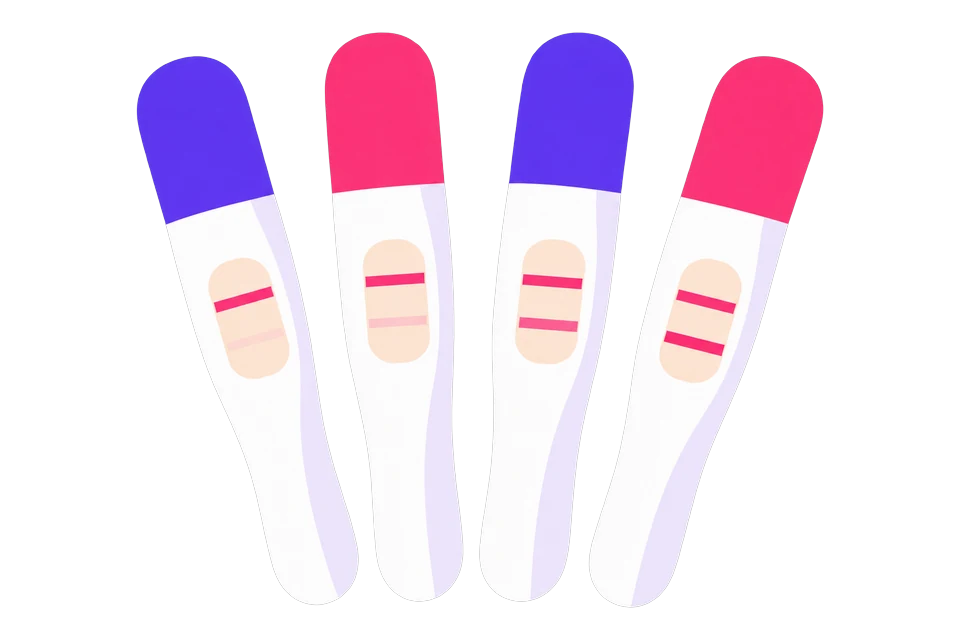
Got a strip already? Compare its lines with the online ovulation test reader.
Sources
by GetSolution.
Common questions
When am I most fertile?
In the days before ovulation and on the day itself. Cleveland Clinic says sex may lead to pregnancy from about five days before ovulation to one day after.
When do I ovulate?
Usually about 14 days before your next period starts, according to the NHS. In a 28-day cycle that’s around day 14, and in a 32-day cycle around day 18.
When should I start using ovulation tests?
A few days before you expect to ovulate, so you catch the LH surge. The FDA says the surge comes about 1 to 1½ days before ovulation. Follow the timing in your test’s instructions.
Does this work with irregular cycles?
Less well. The calculation assumes the same cycle length each month. With irregular cycles, ovulation tests or tracking several cycles give a better idea of when you ovulate.